For CEOs and CTOs of Series B and Series C SaaS companies
Neutralize the upcoming cost crisis your reports can't see.
Success changed the rules. The structure didn't.
The product found its market as one system: any part could change at any time, decisions in one room, features in days. That was the right way to find the market. Every feature since tied more of the product together. A change that could stay in one domain now drags others with it: more hours, more risk. Defusor measures that extra cost, on the product you already ship.
Turns your git history into what engineering work cost, what it could have cost with an ideal structure, and a plan to close the gap.
You can see the people.You cannot see the extra hours.
You already know what the team costs. Headcount and salaries land every month. The extra hours a change takes, once it drags in other domains of the product, do not. They hide in incidents, meetings, and rework, so they never become a number you have to decide about.
Strategy does not change in time as you scale.
Your hire plans measure people. They do not measure the cost of keeping the old shape while the market moves. Components of the product, the boundaries between them, and the teams that own them stay as they were. Inadequate boundaries let a change in one domain drag in the others. That misalignment is what produces the overspend.
What happens
Market and customers evolve
Product structure falls behind
The product becomes infeasible
The engineering org already feels this.
You already feel this in the org. Velocity goes down while the calendar fills with meetings and reporting. More people are hired to deliver the same outcomes. Tighter management, more reporting, and more hiring are the next steps that make sense. They do not take the extra hours away, because they do not change how the product is put together.
Symptoms
velocity down
more meetings
more reporting
hire more to ship the same
What often comes next
micromanagement
more reporting
overhiring
Defusor shows where engineering cost goes.
It maps spend to the work: what is expensive, why it got expensive, and what that work could have cost with an ideal structure. Built for the CEO or CTO who needs a clear picture before the next headcount plan or process layer.
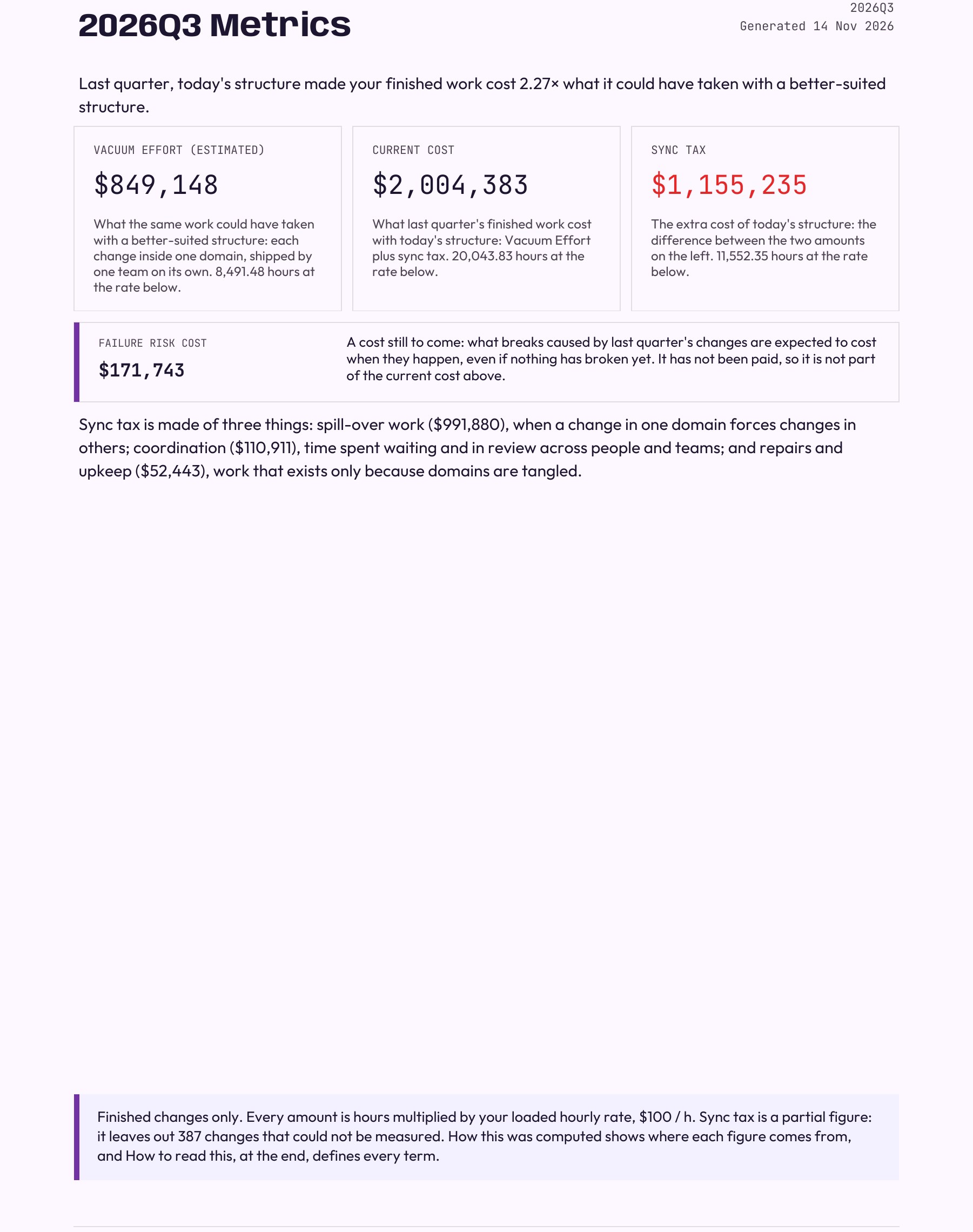
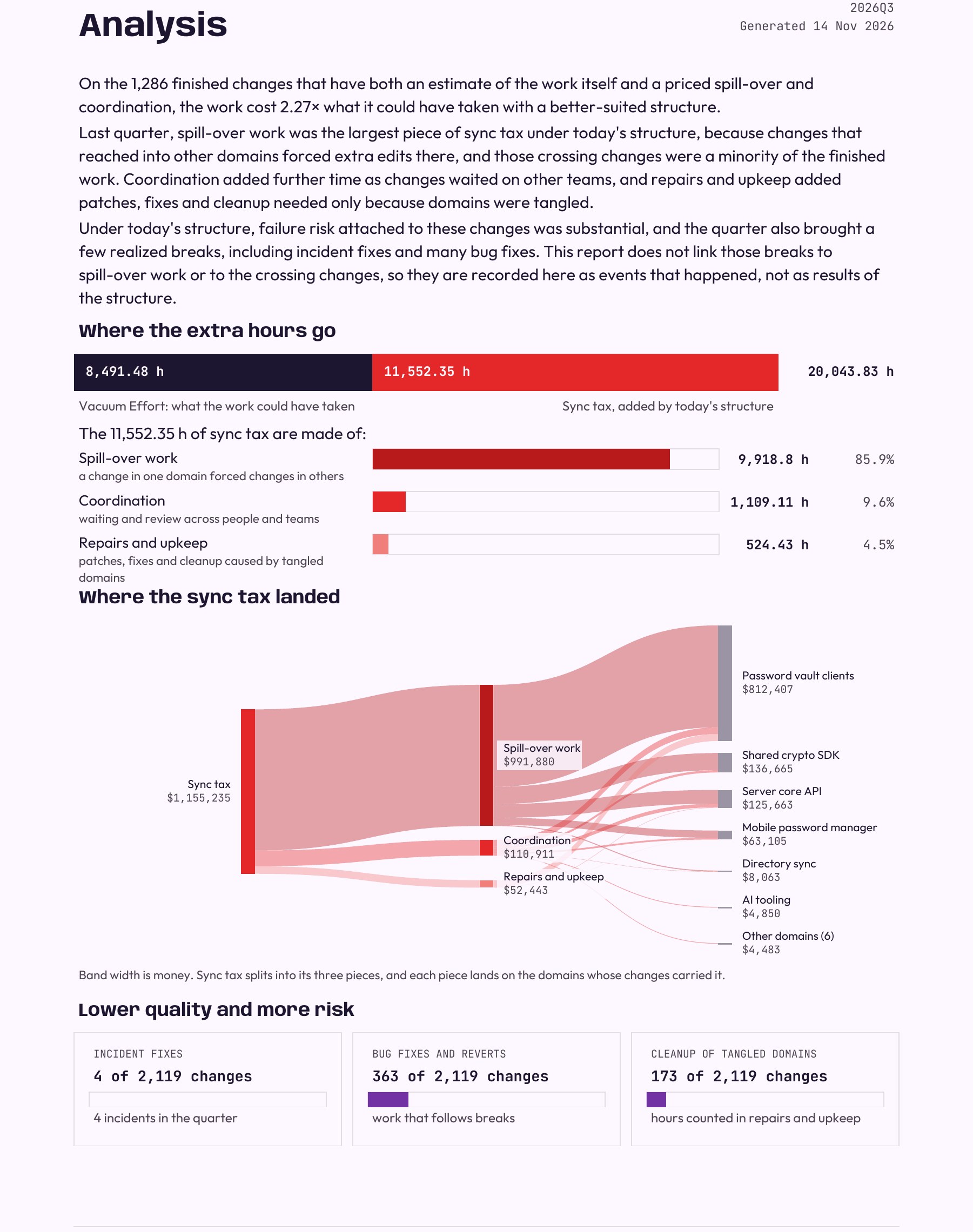
The difference is the sync tax: spill-over work, coordination overhead, and repairs and workarounds. The expected incident cost sits beside it, as a cost still to come.
Each quarterly PDF has eight sections: the comparison, this quarter's changes, domains and teams, how this was computed, explanation, analysis, recommendations, and how to read this.
Real report01The comparison
Real report02Analysis: where the extra hours go
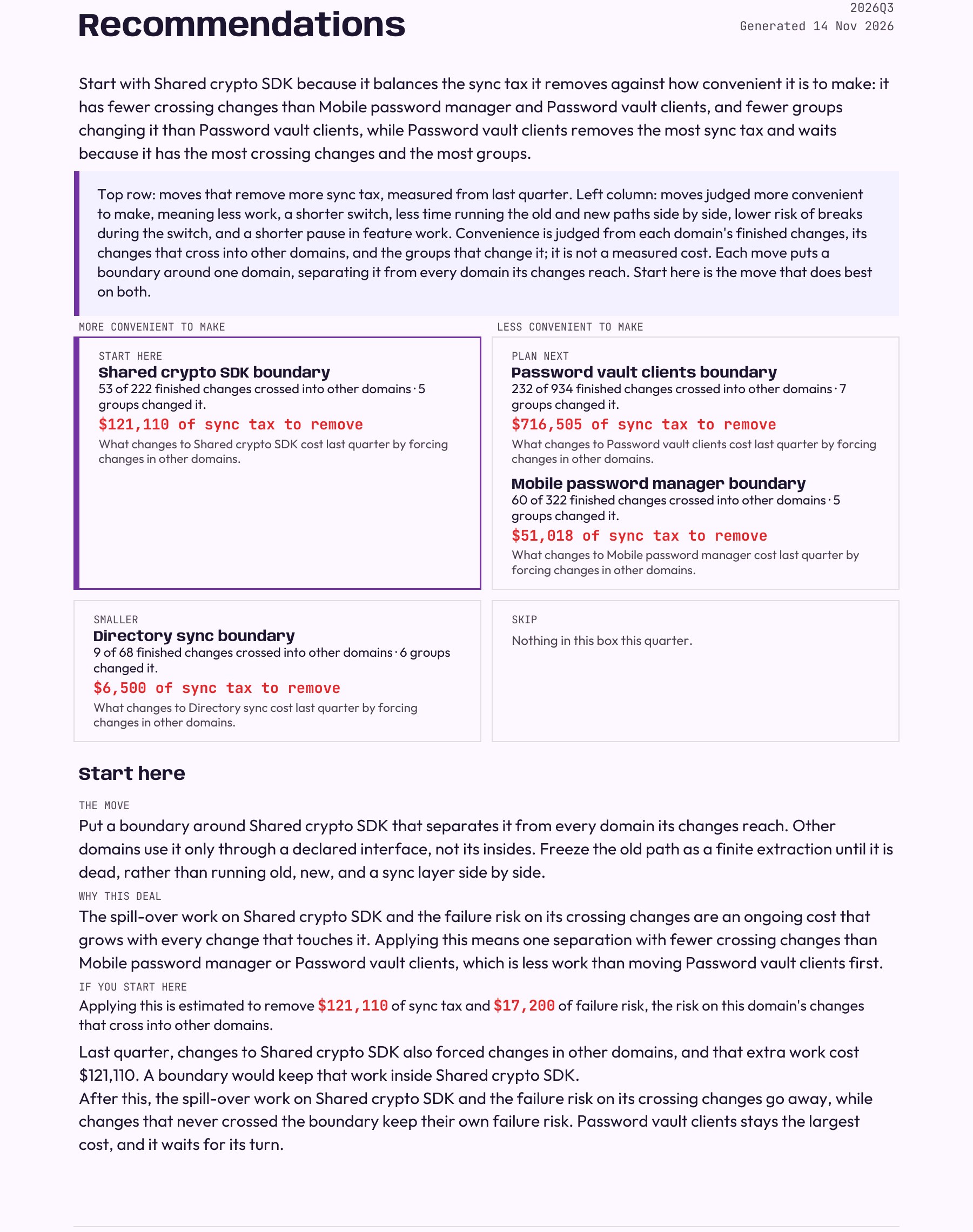
Real report03Recommendations
Pages from a real Defusor report on Bitwarden's public repositories, for 2026Q3. Amounts use $100 an hour, a rate we assumed.
Beamer is not affiliated with Bitwarden; this uses only their public repositories.
Surface the patterns.
The scan surfaces business, product, and tech patterns that point to overspend signals.
GitHubread-only
Your CTO connects GitHub once. Nothing to install.
01
Patterns
AI agents read how the product changes and price the extra hours each change takes.
02
Plan
Every quarter you get a PDF: what the work cost, what it could have cost with an ideal structure, and recommendations.
03
During the scan, Defusor stores inferred data produced by AI agents.
What used to be an invisible business killer is now measurable.
Measure the overspending. Then change what made it expensive.
Defusor is in its testing phase: free to a few companies on GitHub, in exchange for feedback.